The architecture stop
Wat Si Sawai
Prangs with a Hindu past
See the cycling dayGuides
Language
Currency
Check datesfrom $49 · no cancel feeLocate your stop
Map of 33 stops
Choose a route, then tap a pin or stop for its note and a Google Maps link.
South of Wat Mahathat, with 3 Lopburi-style prangs behind a laterite wall.
Google MapsTAT calls Wat Mahathat the centre of the historical park, with a grand pagoda ringed by 8 smaller ones as if they were a lotus.
Google MapsHome of Phra Atchana, a gigantic seated Buddha image in the main hall.
Google MapsThe Fine Arts Department names its prasart among the Khmer-influenced works at ancient Sukhothai.
Google MapsThe Ramkhamhaeng Museum stands near the park entrance and keeps finds from Sukhothai and Si Satchanalai.
Google Maps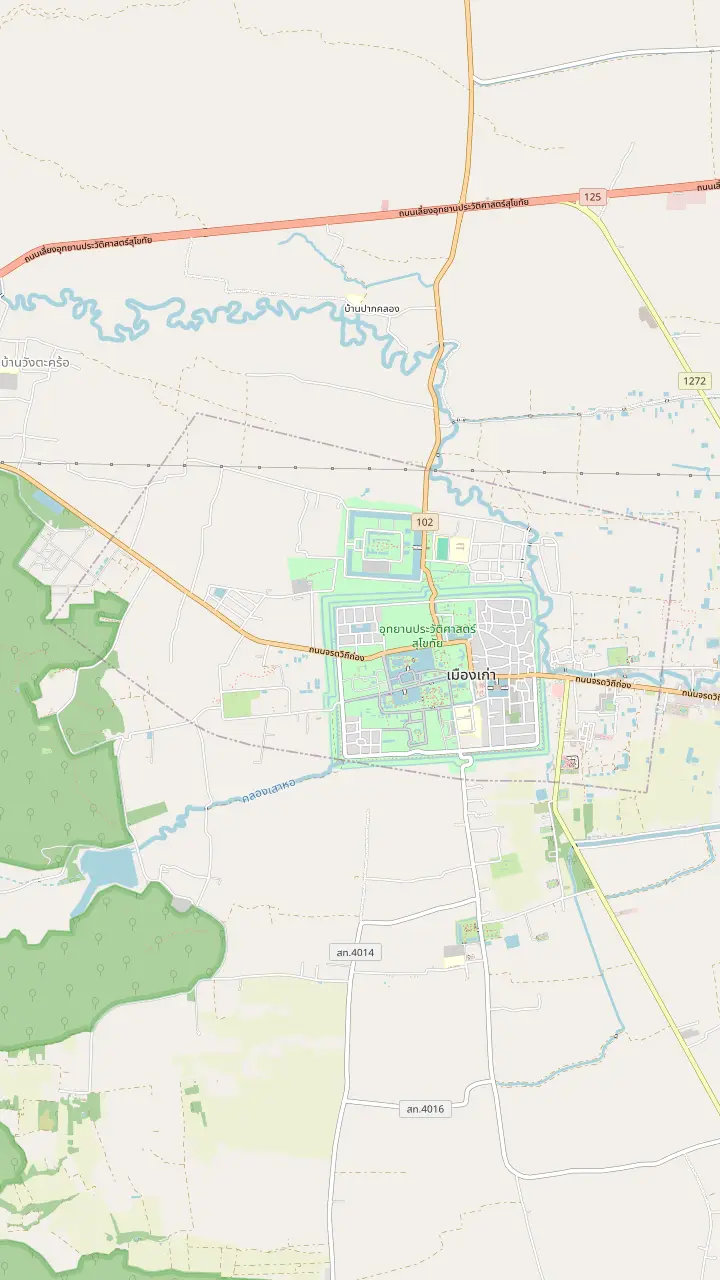
TAT calls Wat Mahathat the centre of the historical park, with a grand pagoda ringed by 8 smaller ones as if they were a lotus.
Google MapsHome of Phra Atchana, a gigantic seated Buddha image in the main hall.
Google MapsThe Fine Arts Department names its prasart among the Khmer-influenced works at ancient Sukhothai.
Google MapsThe temple stands in the Aranyik area, where King Ramkhamheng joined the Kathina ceremony at the end of Buddhist Lent.
Google MapsA temple in the eastern part of the park, on the road toward the town.
Google MapsSouth of Wat Mahathat, with 3 Lopburi-style prangs behind a laterite wall.
Google MapsThe Ramkhamhaeng Museum stands near the park entrance and keeps finds from Sukhothai and Si Satchanalai.
Google Maps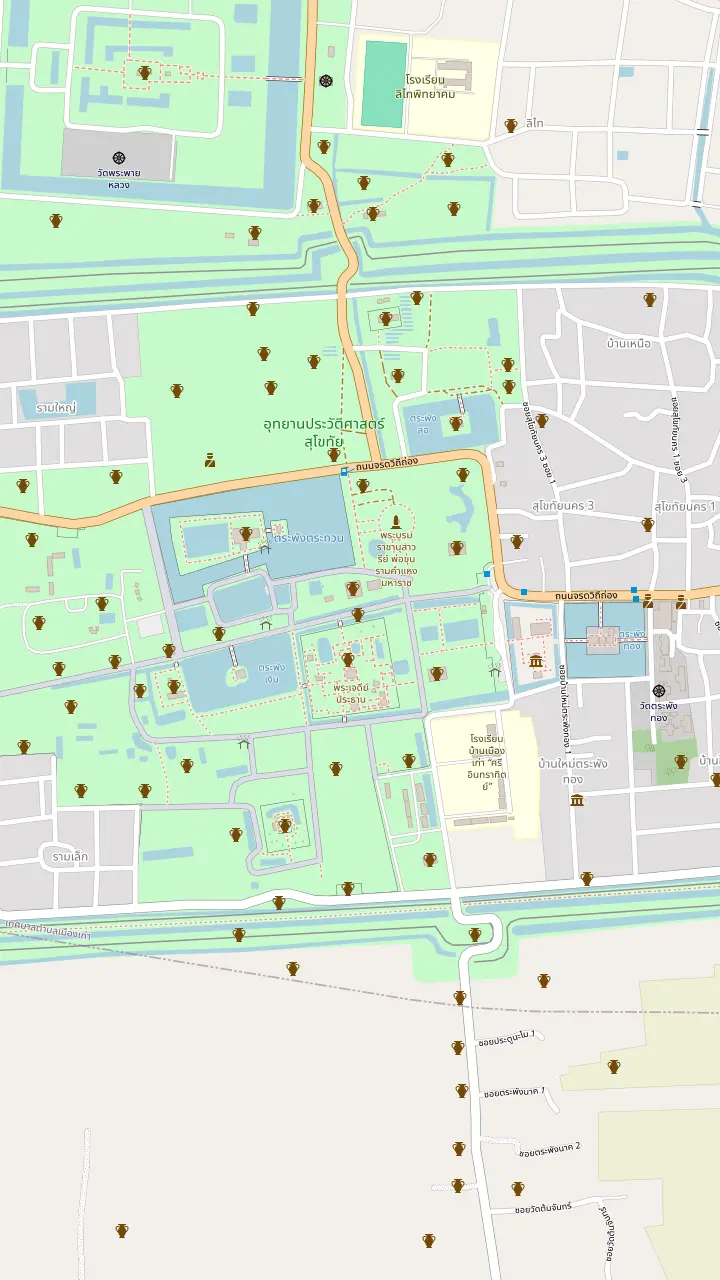
TAT calls Wat Mahathat the centre of the historical park, with a grand pagoda ringed by 8 smaller ones as if they were a lotus.
Google MapsNorth of Wat Mahathat. TAT says its main pagoda looks like a giant bell.
Google MapsNorth-west of Wat Mahathat, with its main sanctuary on an island in Traphang Trakuan Pond.
Google MapsWest of Wat Mahathat, with no surrounding wall and a single lotus-style pagoda.
Google MapsSouth of Wat Mahathat, with 3 Lopburi-style prangs behind a laterite wall.
Google MapsA bronze statue of King Ramkhamhaeng on the north side of Wat Mahathat, at the end of Jarod Vitee Tong road.
Google MapsA small shrine north of Wat Mahathat: a single laterite prang where Lop Buri-style sandstone Hindu objects were found.
Google MapsThe Ramkhamhaeng Museum stands near the park entrance and keeps finds from Sukhothai and Si Satchanalai.
Google Maps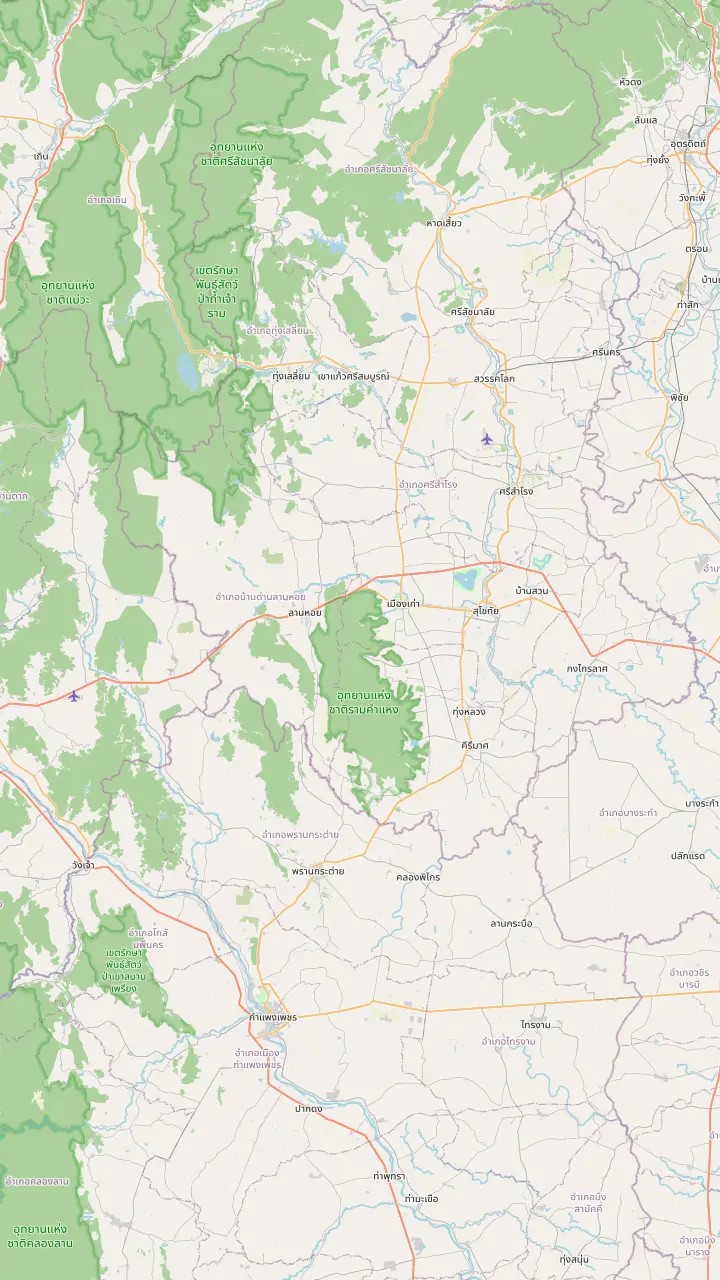
The park lies 12 km from the town of Sukhothai on the Sukhothai-Tak highway.
Google MapsUNESCO calls Si Satchanalai the spiritual centre of the kingdom and a centre of its ceramic exports.
Google MapsUNESCO describes Kamphaeng Phet as the kingdom's southern frontier town with military functions.
Google Maps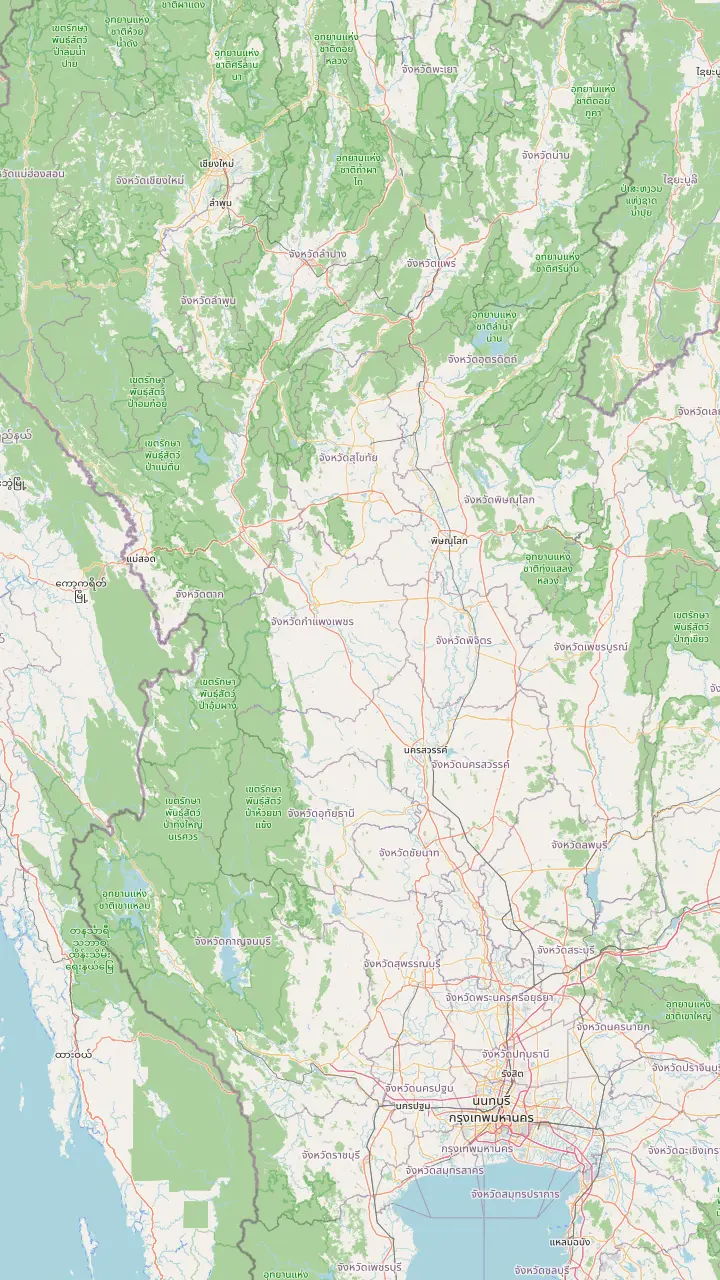
TAT puts Sukhothai 420 km north of Bangkok, four to five hours by car or 1 hour 15 minutes by air.
Google MapsThe kingdom in the south that Sukhothai ended up joining, according to the Fine Arts Department.
Google MapsAyuthaya made Pitsanulok the seat of a viceroy over the northern state.
Google MapsCentre of the Lan Na Kingdom, a rising power that put Sukhothai at risk.
Google MapsThe airport nearest to the park; UNESCO describes it as dedicated almost exclusively to bringing visitors to the historic towns.
Google MapsThe park lies 12 km from the town of Sukhothai on the Sukhothai-Tak highway.
Google Maps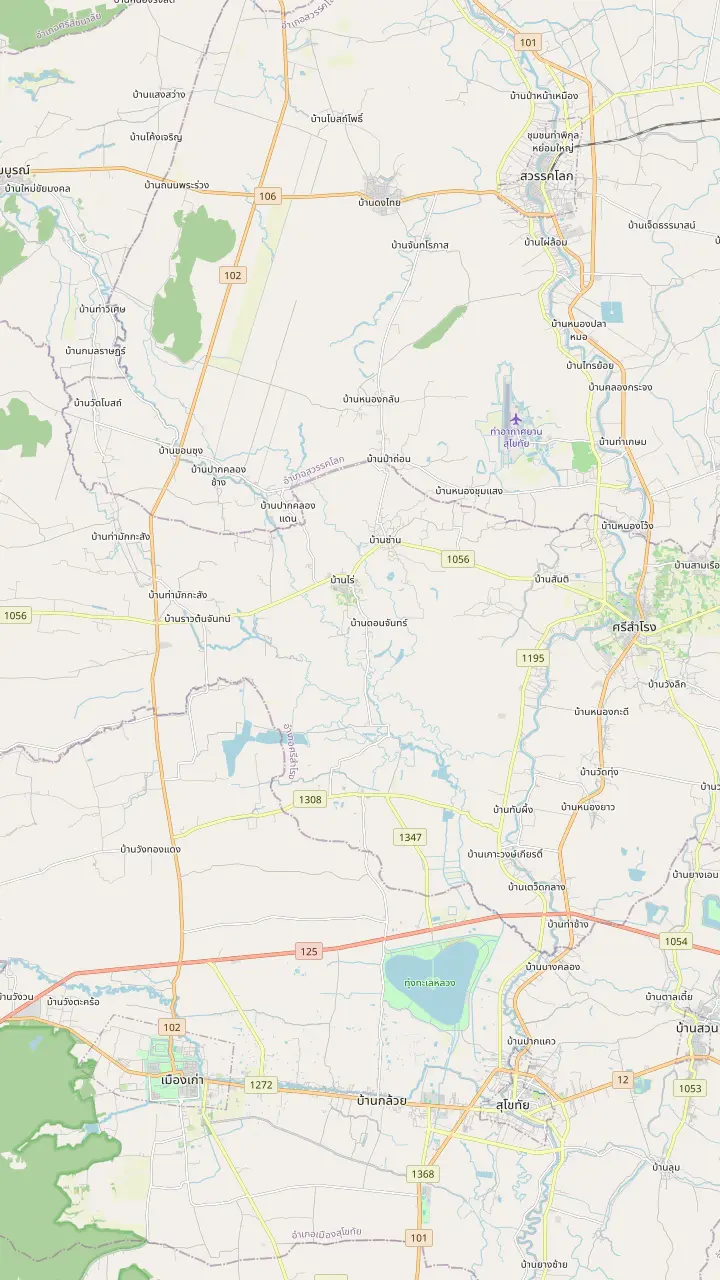
The modern town, with the shops and the bus terminal, where the Saturday walking street market sets up in the evening.
Google MapsThe park lies 12 km from the town of Sukhothai on the Sukhothai-Tak highway.
Google MapsThe airport nearest to the park; UNESCO describes it as dedicated almost exclusively to bringing visitors to the historic towns.
Google MapsA town north of the airport whose old Chinese quarter has street art made in a 2019 TAT project.
Google Maps© OpenStreetMap contributors · map data
Temples with almost nothing in common: a Khmer-flavoured prang sanctuary near the centre of the ruins, and a gigantic seated Buddha in a hall on the northern side. How to see both.
Editorial team, sukhothaihistoricalpark.click · Updated November 12, 2026 · A 8 min read
Basics
Wat Si Sawai and Wat Si Chum follow the central temples on most routes, and they sit in different parts of the park. Wat Si Sawai lies on the south side of Wat Mahathat, within the compact central zone,2 while Wat Si Chum belongs to the northern external zone that the Fine Arts Department ticket treats separately.5 Choosing between them is partly a choice of how much riding you want.
From the town of Sukhothai the park is a ride of 12 km along the Sukhothai-Tak highway,8 and the two temples are best understood as a short loop and a longer outing from the same base. In the central zone the ruins sit close together. In the northern zone the Fine Arts Department counts 30 historic sites in the areas outside the rampart,9 so the ground opens out as you head north.
This page keeps both temples together because they answer the same question from opposite ends: what did the people of Sukhothai build for worship, and who taught them how? Wat Si Sawai gives a Hindu-and-Khmer answer in laterite. Wat Si Chum gives a Buddhist answer in stucco and presence. Seen side by side, they make the history of the park easier to hold than any single monument does.
Side by side
| Point | Wat Si Sawai | Wat Si Chum |
|---|---|---|
| Where | South of Wat Mahathat2 | Northern external zone5 |
| The draw | 3 Lopburi-style prangs1 | A gigantic seated Buddha3 |
| Faith | Hindu start, later Buddhist14 | Buddhist hall with an image15 |
| Material | Laterite wall and hall13 | Faded murals on the hall16 |
| Hours | Central zone hours11 | 7:30 AM to 5:30 PM6 |
From TAT and Fine Arts Department descriptions; the central zone opens at 6:30 AM and shuts at 7:30 PM, Sundays included.11
Wat Si Sawai stands out among the temples of Sukhothai. TAT lists its main highlights as 3 prangs in Lopburi style, influenced by Hindu belief, standing next to an ordination hall made of laterite.1 A prang is the tall, corncob-shaped tower that readers will know from Khmer temples, and here the group is surrounded by a laterite wall.13
The older TAT description adds that the main prang was built in the Lop Buri or Hindu style, while the buildings beside it are Buddhist viharns.13 That mix is the point of the visit. Historians found Chinese porcelain and statues of Hindu gods in the area and concluded that the site began as a Hindu structure and was later turned into a Buddhist temple.14
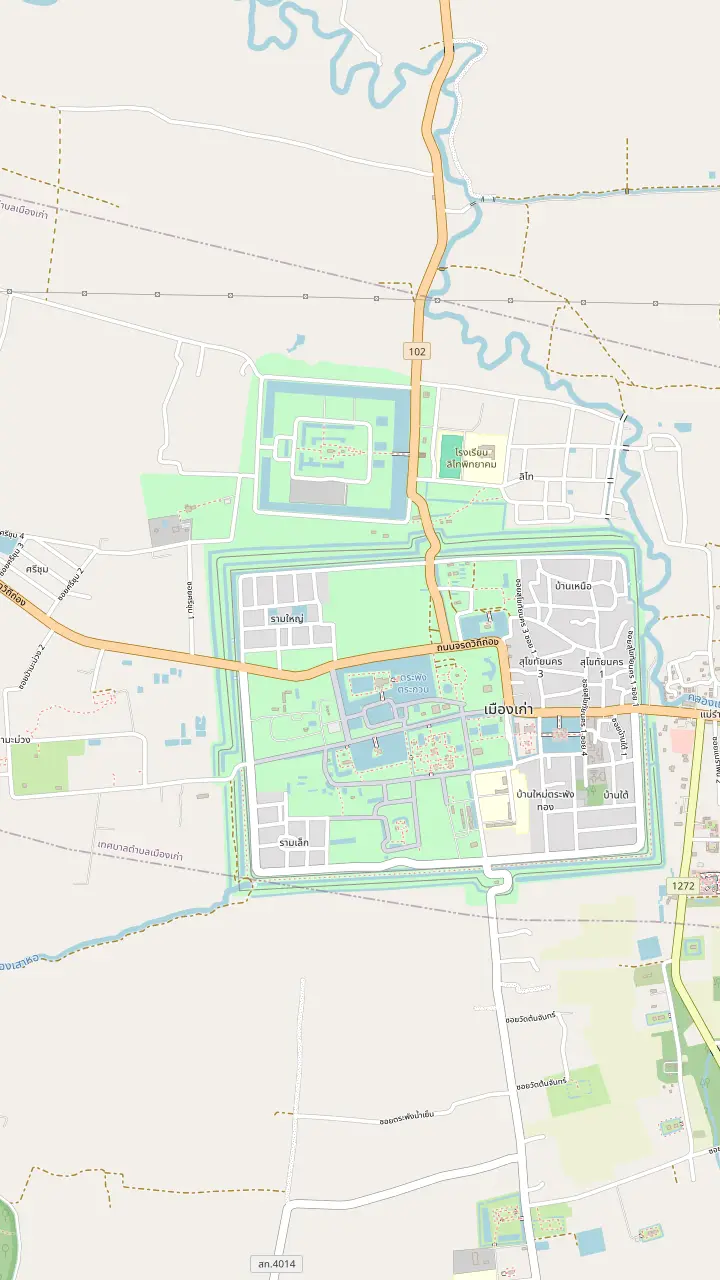
You can stand at the wall and take in the group in a minute, but the temple rewards a slower walk around the prangs, where the laterite blocks show their joins. It sits on the south side of Wat Mahathat, so it is easy to finish a central circuit here.2 The map near the top of this page shows where it lies in relation to the main temple and to the museum at the park entrance.
A day in the park
First hour
The northern zone opens at 7:30 AM, with Wat Phra Phai Luang and Wat Si Chum.6
Morning
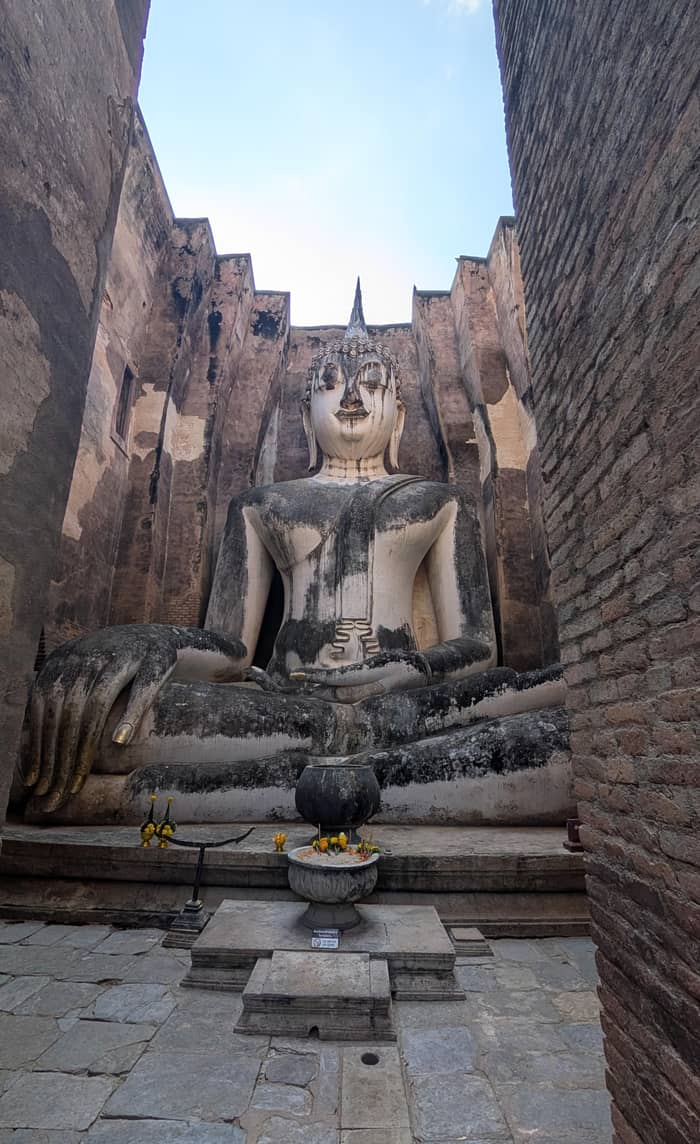
See the gigantic Buddha in the main hall while the air is cool.3
Midday
Head back toward the central zone and shade.
Afternoon
Three prangs in Lopburi style, south of Wat Mahathat.2
Late afternoon
The Ramkhamhaeng Museum stands near the entrance.10
Closing
The central zone closes at 7:30 PM, or 9:00 PM on Saturday.11,12
The Fine Arts Department explains the background in its history of the park. Hindu worship images gave way to Buddha images when the Khmer king Jayavarman VII (spelled Chaivoraman VII by the department) turned to Mahayana Buddhism, and that change entered architecture as well as statuary.21 The department lists Prasart Wat Phra Pai Luang at ancient Sukhothai among the works with Khmer influence, alongside the Lopburi prangs of Sam Yod and Wat Phra Si Mahathat.20
Smaller evidence turns up too. The department notes a Khmer site called Prang Puja on a hill at Ban Nacheng in Khireemas District,22 and it describes the Ta Pha Daeng Shrine at ancient Sukhothai as presumed to belong to the contemporary Bayon art of Khmer culture.23 Together, these show that the Sukhothai area took part in a wider world of temple building before Sukhothai became the very first capital city of Thailand.24
For a visitor, the lesson is simple and visual. Look at Wat Si Sawai's prangs and then at the bell-shaped and lotus-bud chedis of the central temples. UNESCO says many influences and local traditions were absorbed rapidly enough to forge what is known as the Sukhothai style.25 The prangs of Wat Si Sawai show one of the ingredients, and the chedis elsewhere show what the cooks made from it.
Pick your temple
Say how you like to travel, and the answer follows from the park's own hours and zones.
If I want a short central circuit
Wat Si Sawai
It lies south of Wat Mahathat in the compact central zone.2
If I want the giant Buddha
Wat Si Chum
TAT says a gigantic Buddha image sits in its main hall.3
If I start early
The northern zone
It opens at 7:30 AM.6
If I am interested in Khmer influence
Wat Si Sawai first, then Wat Phra Phai Luang
The Fine Arts Department lists Phra Phai Luang among Khmer-influenced works.20
If I want the inscription
Wat Si Chum
The 2nd stone inscription was found there.18
Khmer-era stops compared
The architecture stop
Prangs with a Hindu past
See the cycling day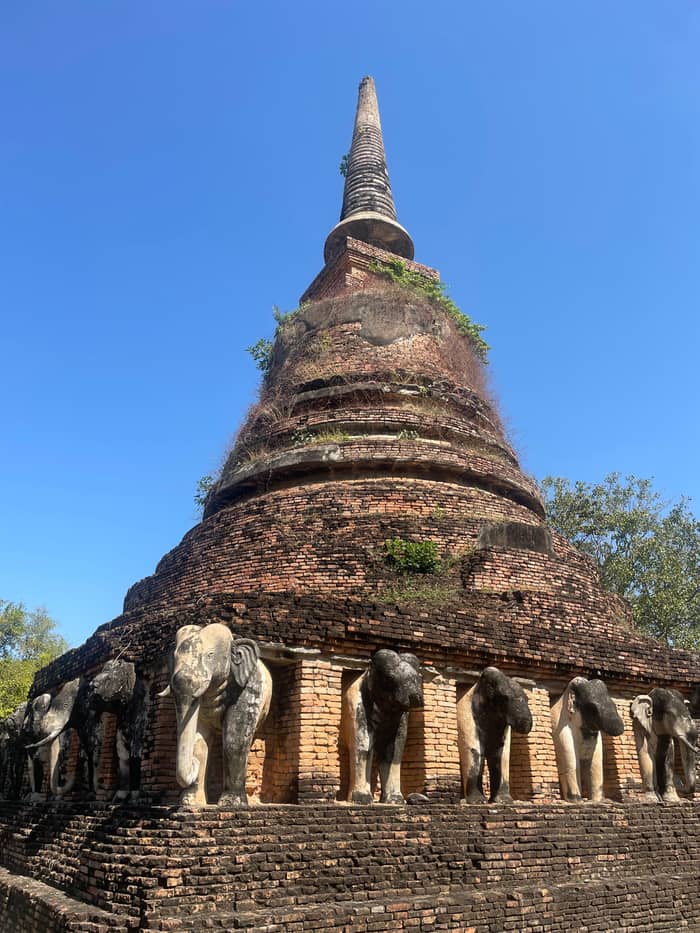
The presence stop
The speaking Buddha
See the cycling day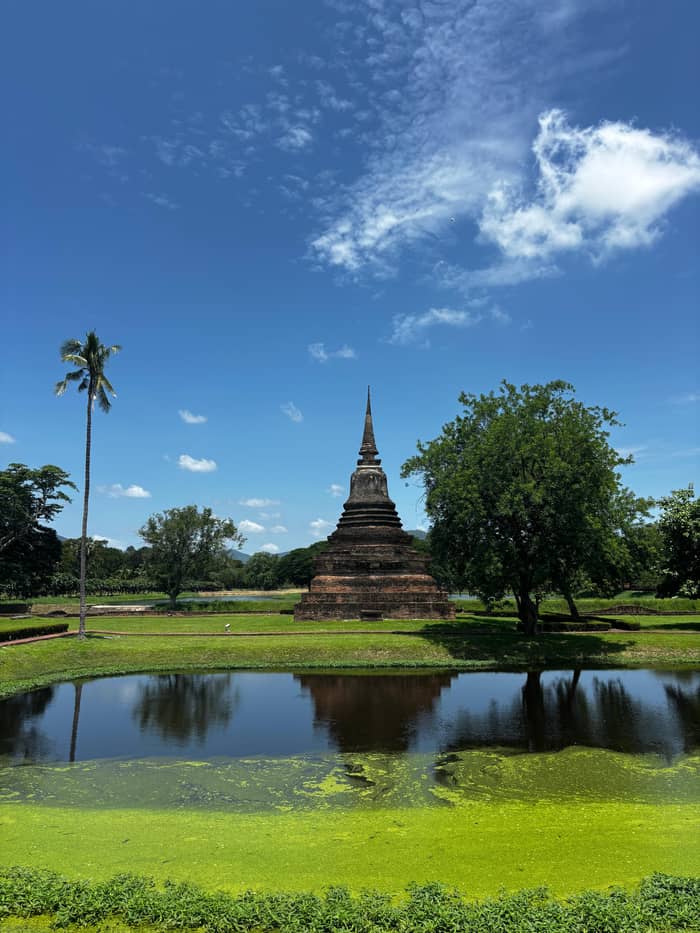
The northern bonus
Khmer-influenced prasart
See the cycling dayWat Si Chum in Sukhothai Historical Park is a different kind of experience, built around presence rather than architecture. TAT says the main hall holds Phra Atchana, a gigantic Buddha image shown subduing Mara,3 and that the image is known as a speaking Buddha.4 The hall is unusual, since the main image stands in a hall rather than in the chapel where normal temples keep it.15
The setting adds to the effect. TAT says faded murals can still be seen on the main hall, giving a glimpse of the temple at its height.16 The same source says the temple was probably built in the era of King Ramkhamhaeng the Great and abandoned in the late Ayutthaya era,49 and that King Bhumibol Adulyadej ordered its renovation in 1952.19
If you are visiting Wat Si Chum for the first time, give it time. The usual mistake is to arrive, photograph the image from the doorway and leave. Sit for a few minutes where the temple's rules allow, look at how the light moves across the hall and the Buddha's face, and remember that this is still a place of reverence. Dress as for any temple, with covered shoulders and knees, and keep your voice low.
Wat Si Chum has a second claim on history. TAT says the 2nd stone inscription, also called the Wat Si Chum stone inscription, was found at the temple.18 The Fine Arts Department treats that inscription as an account of Sukhothai's early period and of its dynasty's beginnings, a story told on the history page.50
UNESCO places the stone inscriptions of the historic towns at the heart of its case, saying they provide evidence of the earliest examples of Thai writing.51 The wider story belongs to the history page of this guide, but it helps to know at Wat Si Chum that a document of the kingdom's founding came from this very site. The temple is a monument, an archive and a place of worship in a single hall.
The Fine Arts Department attributes the invention of the Thai alphabet to King Ramkhamhaeng,52 and the alphabet he is credited with is still in daily use, UNESCO notes.53 A reader who can follow modern Thai letters is, in a loose sense, reading a descendant of the script that these stones were cut in. You do not need to read the script to feel that when you stand in front of the hall.
Video
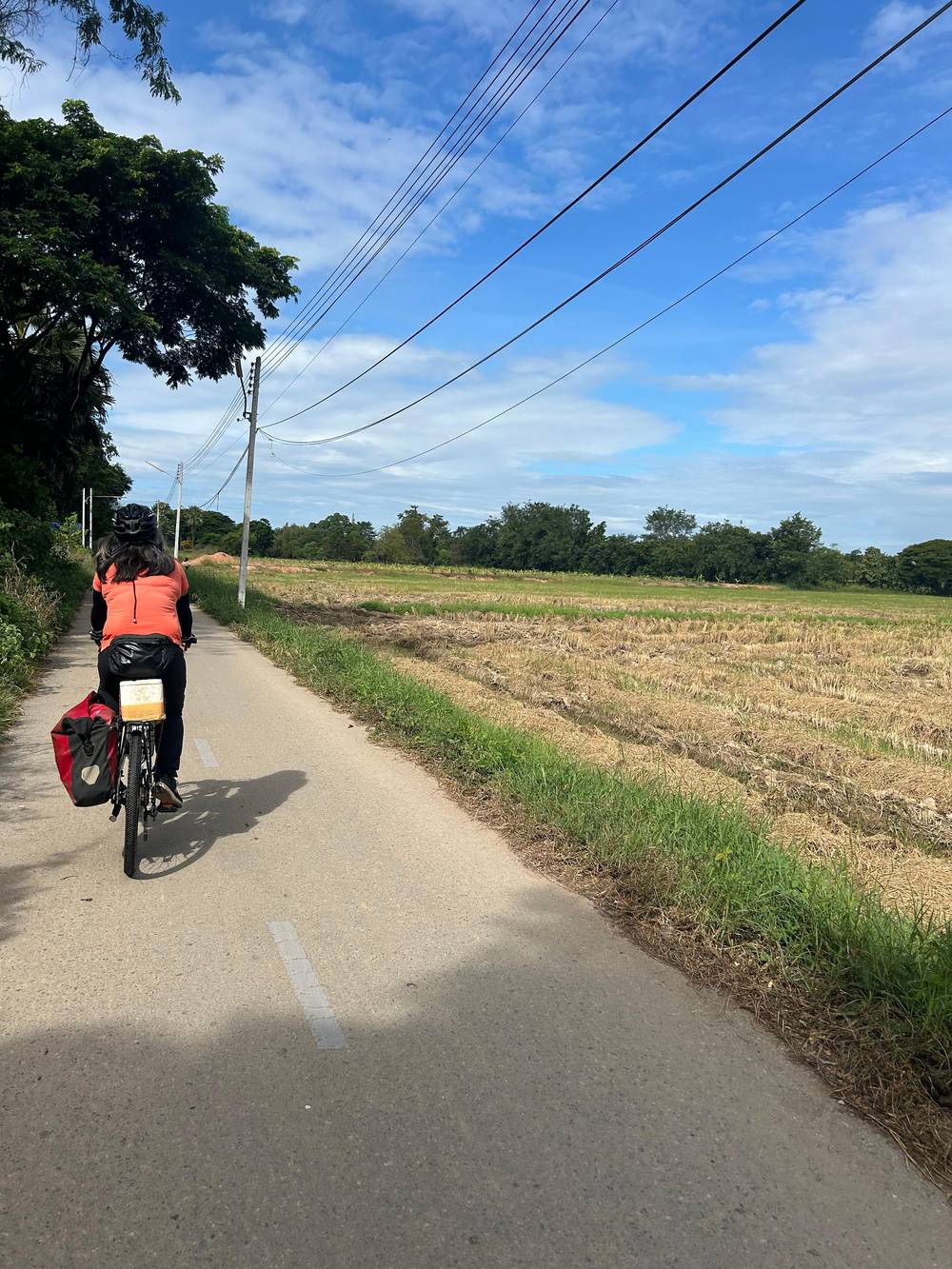
Endless Journey on YouTube · The video stays unloaded until you press play.
In his opinion, this ruin was once a Hindu shrine, but was later converted into a Buddhist monastery.
Before you ride
The practical side of Wat Si Chum is its separate ticket, since the north of Sukhothai Historical Park is a zone of its own. Admission is split into 3 zones, with Wat Phra Phai Luang and Wat Si Chum forming the northern external zone, open from 7:30 AM to 5:30 PM.5,6 The central zone and the Aranyik area have their own hours, so the day needs a little arithmetic if you want the whole park.11,54 Jot down the closing times of the zones before leaving the hotel, and no gate will catch you out.
Vehicle fees are 10 THB for a bicycle and 50 THB for a car, the latter only at the Aranyik area and Wat Phra Phai Luang.7,55 Inside the park, TAT reports tram services and bicycles to rent for exploring the large area.44 Cycling to the north is rewarding on a cool morning and tiring in the middle of the day, so set out early or late and carry water.
Be careful when comparing this page with a guided cycling day. The guided day offered on this site begins at the village of Ban Khuai, passes the Eastern Gate with a guide and then rides on to the south area of the park, so it is not built around Wat Si Chum. If the northern Buddha is your priority, plan it as a separate ride or ask the operator what the day includes before you book.
Put the two temples on different halves of a day. Begin with Wat Si Chum when the northern zone opens at 7:30 AM, while the air is cool and the hall is quiet,6 and ride back toward the centre for lunch. In the afternoon, finish at Wat Si Sawai on the south side of Wat Mahathat, close to the museum.2,10 Carry water for both legs of the ride, and keep a light layer for the cool start.
If you have time for a third stop in the north, Wat Phra Phai Luang shares the zone and the ticket with Wat Si Chum, and the Fine Arts Department lists its prasart among the Khmer-influenced works of ancient Sukhothai.20 That gives you three views of the same story: Khmer influence at Wat Phra Phai Luang, a mixed Hindu and Buddhist sanctuary at Wat Si Sawai, and a pure Buddhist presence at Wat Si Chum.
Keep your plans flexible. Official hours and zone boundaries can change, and the Fine Arts Department's own page is the place to confirm them. For a gentler version, split the two temples over separate days, perhaps pairing Wat Si Sawai with the central temples and giving Wat Si Chum a morning of its own. Either way, look at our page on the best months before you settle on a date.
FAQ
TAT places Wat Si Sawai on the south side of Wat Mahathat, with 3 pagodas in Lopburi style.2
Historians found Chinese porcelain and Hindu statues there and concluded it began as a Hindu structure before becoming a Buddhist temple.14
TAT calls it the Wat Si Chum stone inscription.18
The Fine Arts Department gives these hours for Wat Phra Phai Luang and Wat Si Chum.6
Cars pay 50 THB, and only at the Aranyik area and Wat Phra Phai Luang.55
The listing names the Eastern Gate, lunch and the south area, so ask the operator about the north.
Sources
Read next
Planning Sukhothai? Ask a real person here.