The independent way
Own bicycle ride
Hire in the park
See the cycling dayGuides
Language
Currency
Check datesfrom $49 · no cancel feeHands-on checklist
List of 11 items
Mark items as done. Your progress is saved on this device only.
0 / 11 ready
All set. Only the date and your hotel for pickup are left to choose.
Save a placeThe ruins are protected heritage and still places of worship, which sets the dress and conduct for a day of cycling between temples. What Thai authorities ask of visitors, in plain terms.
Editorial team, sukhothaihistoricalpark.click · Updated November 12, 2026 · A 7 min read
Basics
The Sukhothai Historical Park dress code is simply the one TAT sets out for any Thai temple. Men should wear a sleeved shirt, with trousers or shorts reaching past the knee.1 Women should choose a skirt reaching below the knee and a sleeved top rather than one with spaghetti straps.2 Everyone should wear shoes, or sandals that have a back strap.3
Cycling asks for the same cover with more practicality. Light trousers or knee-length shorts, a loose shirt with sleeves and closed shoes with a grip work for pedalling and for temple steps. The record of the guided cycling day on this site asks for comfortable clothes and shoes and cautions that the day can get very hot. Carry a light scarf or shirt if you prefer to ride in less.
Nobody is likely to check your clothes at every temple, so the responsibility is yours. Think about the temple that you will reach at the end of a long ride: dressing to the standard from the start is easier than changing at the roadside. A sarong or thin cotton wrap is useful for the afternoon, and weighs nearly nothing in a bag.
The rules at a glance
| Situation | What to do | Source of the rule |
|---|---|---|
| Entering a temple hall | Go barefoot, step over the threshold4,12 | TAT etiquette guide |
| Sitting before a Buddha | Keep your feet pointing away13 | TAT etiquette guide |
| Passing a monk | Women do not touch him or his robes14 | TAT etiquette guide |
| Taking photographs | Do not block people who pray15 | TAT etiquette guide |
| Flying a drone | Register, insure and get approval first6 | TAT drone guide |
| Moving through the park | Use marked ways; bicycles pay a vehicle fee16 | Fine Arts Department |
Rules as TAT and the Fine Arts Department state them; signs at the park and the instructions of staff come first.9
The park is a heritage site, yet UNESCO notes that the temples and monasteries of the sites are still revered and used for worship, and that traditional festivals continue on site.10 So the dress and conduct rules apply even though the roofs are gone and the courtyards are empty. Think of the park as a working sacred place that happens to be a museum, and the rules follow naturally.
The ruins are also protected by law. UNESCO says the sites are protected under the Act on Ancient Monuments of 1961, as amended in 1992, enforced by the Fine Arts Department,11 and that activity inside the parks is closely controlled, with the use of the monuments themselves tightly regulated.9 Treat any sign you meet as part of that framework.
That framework is worth understanding before you climb, lean on or sit on any structure. A brick base that has stood for centuries has no tolerance for a person scrambling over it. Follow marked paths, keep to the edges of platforms, and leave stones, tiles and fragments exactly where they lie. If a sign tells you a section is closed, treat it as a firm instruction and move on.
A respectful visit
Before leaving
Sleeves, knees covered, shoes with straps, water and a hat.1,3
Arrival
The admission is divided into 3 zones with their own hours.7
First stop
Do not touch it, and walk around it clockwise.5
At each hall
Visitors are expected to go barefoot inside.4
Midday
Summer temperatures run 28 to 38 degrees Celsius.8
Leaving
Respect the strict control of the monuments.9
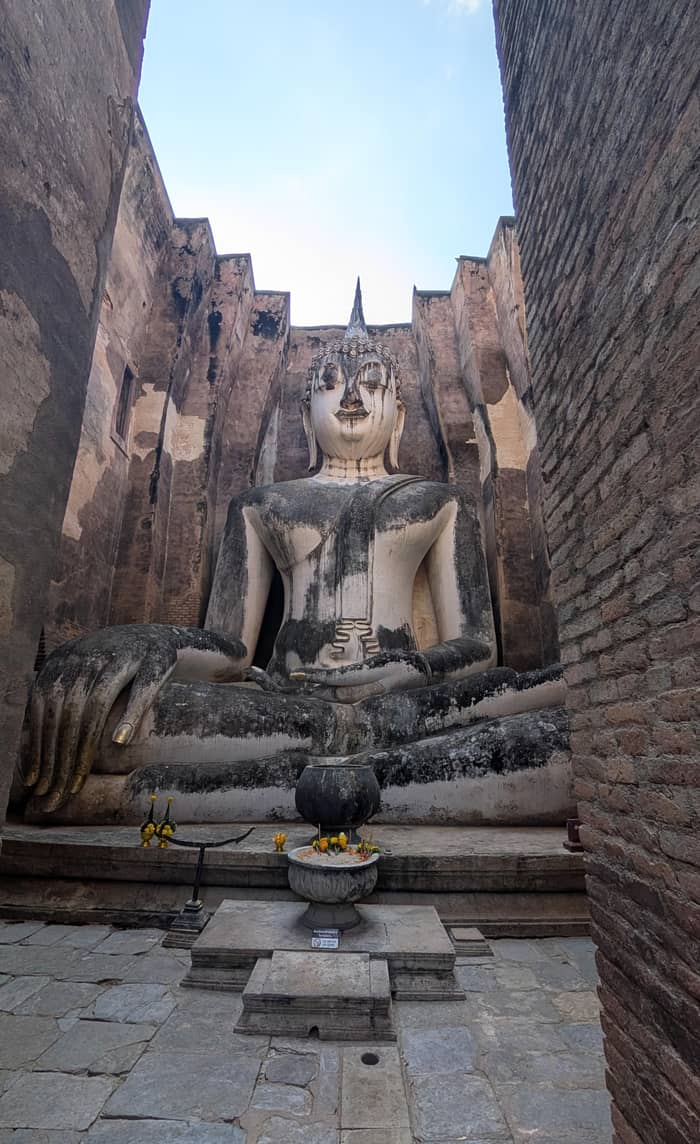
TAT's etiquette guide gives the clearest rules. Do not touch or point at a Buddha statue, walk around it clockwise, never turn your back to it, and do not raise yourself higher than the image.5 When sitting in front of a statue, keep your feet pointing away from it and never directly toward it, which TAT calls a sign of disrespect.13 These apply at the great seated figures and at the small niches alike.
Visitors enter a temple hall barefoot, and TAT notes shoe racks outside all temples,4 while the raised threshold found at most temples should be stepped over rather than onto.12 Remove hats and sunglasses, and keep your phone off or on silent.21,22 Do not speak loudly or yell, and do not smoke, chew gum or snack as you walk around.23,24
Monks are part of the picture at active sites. TAT says women are not allowed to touch a monk or his robes, and that a woman who wants to pass something to a monk can give it to a man to hand over, or put it down and let the monk pick it up.14,25 Pointing the Western way is considered inappropriate, so to indicate something, offer an open hand, palm up, and gesture with your fingers together.26
Pick your approach
What do you want from the visit? The rules and options below suggest a way in.
If To see everything at my own pace
Hire a bicycle in the park
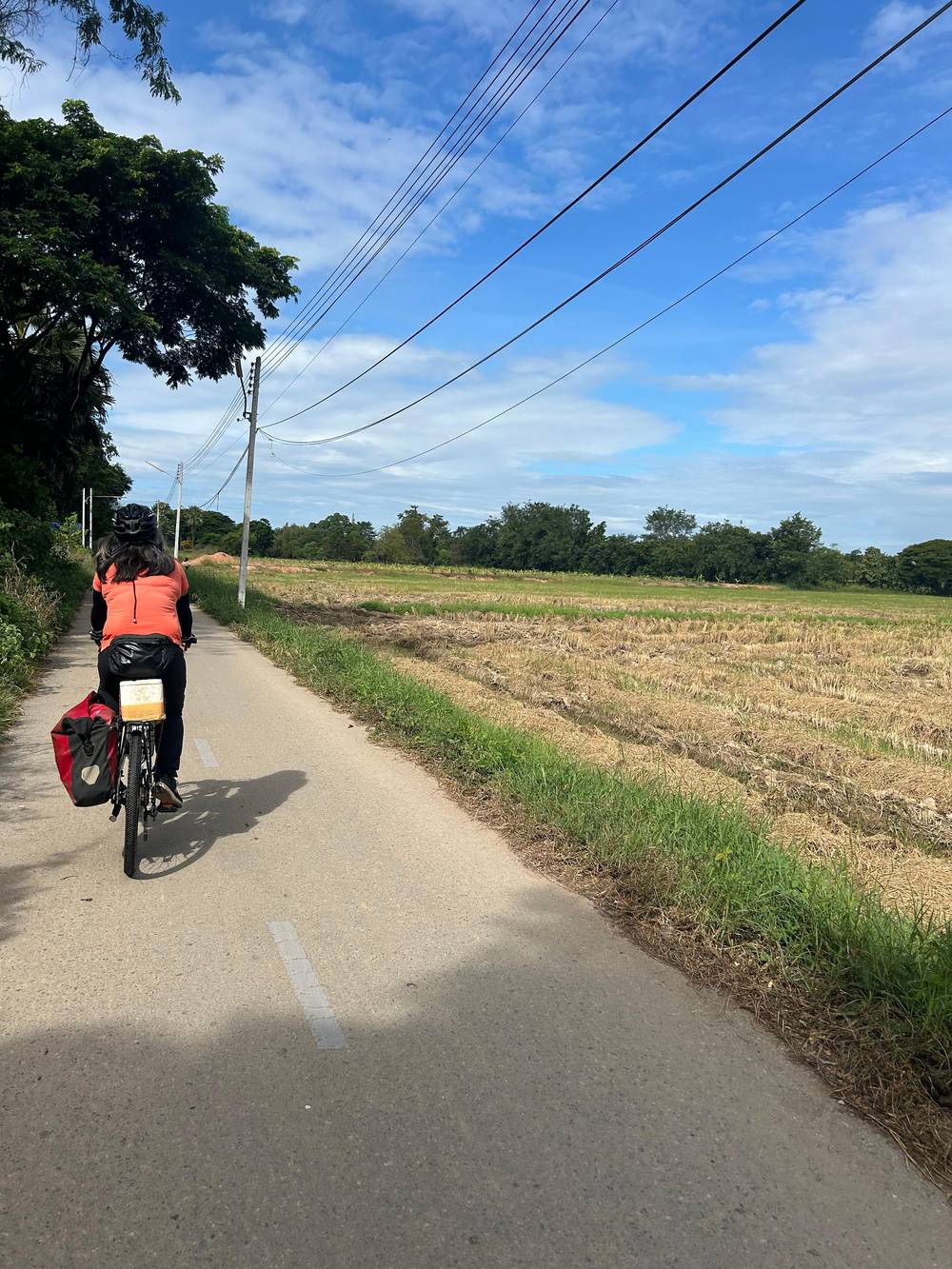
TAT says the park offers bicycles for rent.17
If To save energy in the heat
Take the tram
TAT says the park offers tram services.17
If To have a guide explain the ruins
The guided cycling day
The record lists a live guide in English.
If To bring a drone
Check the registration and approval rules first
Registration, insurance and approval are required.6
If To get help in an emergency
Call the Tourist Police
The hotline 1155 runs 24 hours.20
Ways to visit
The independent way
Hire in the park
See the cycling day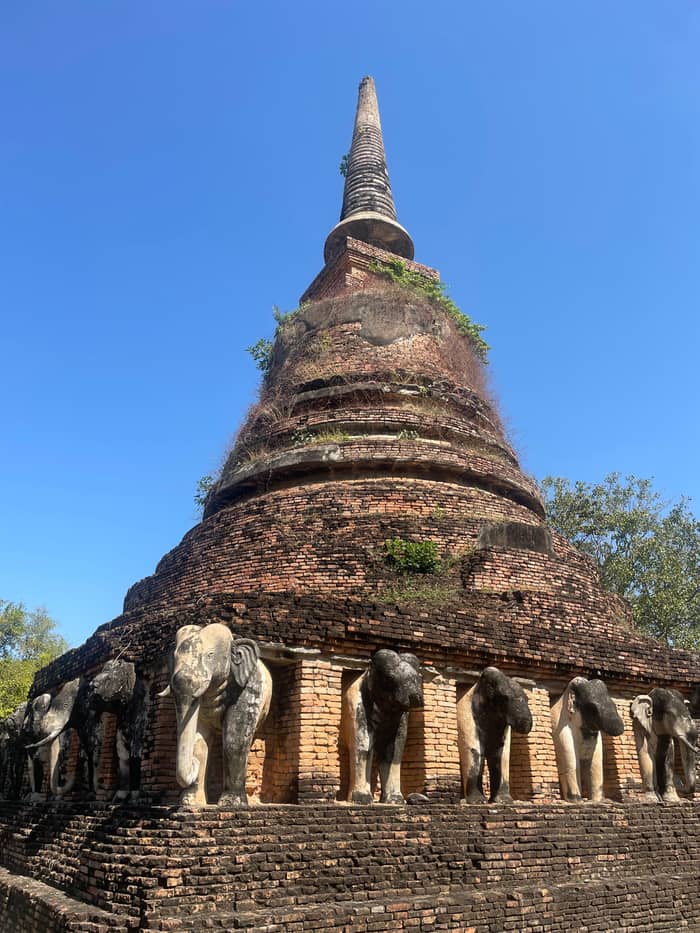
The easy way
A ride between ruins
See the cycling day
The guided way
A small group with a guide
Most temples allow photographs, but TAT cautions that blocking someone to get your shot is rude, above all when they are praying or giving a donation.15 In practice, that means waiting your turn at the best angle, lowering the camera when a ceremony begins, and never using a Buddha image as a prop for a pose.
Drones are a different matter. TAT's updated guide is blunt: nothing flies until the drone and its operator are registered and authorised, with insurance in place and an approved flight through the UAS Portal before each operation.6 Flight details must be submitted at least 3 days in advance,27 and visitors should look up the rules of national parks, local authorities and the site itself before flying.28
A heritage park is the kind of place with rules of its own, so do not assume a registered drone can launch at the ruins. Ask the park office, and treat a refusal as final. TAT adds that a violation can bring imprisonment of up to a year, a fine as high as 40,000 Baht, or both penalties.29 A phone on silent and a camera on a strap are enough for most visitors.
Guided or independent
Choose a group size to see what each guided option costs, from a half day to a full day with lunch.
3 options compared
Choose a group size to see what each guided option costs, from a half day to a full day with lunch.
≈
View≈
View≈
ViewFigures are GetYourGuide from-prices, translated at the ECB reference rate. The booking step shows what you pay exactly.
Learning how to visit Sukhothai Historical Park is mostly learning its zones. The Fine Arts Department sells admission by 3 areas: the inner historic zone, the Aranyik area in the west, and the northern zone around Phra Phai Luang and Wat Si Chum.7 Tram services and rental bicycles cover the large area,17 and bicycles pay a vehicle fee of 10 THB on entry.16
Entry costs nothing for students in uniform or with a student card, for clergy of every religion and for visitors aged over 60.30 Opening hours are 6:30 AM to 7:30 PM Monday to Friday and Sunday, and until 9:00 PM on Saturday for the main zone.18,31 The Tourist Service Centre in the park gives information and displays models of the old buildings.19
If you are wondering about audio guides, the official sources used for this guide do not mention one, so ask at the Tourist Service Centre what is on offer on the day. A live guide is the other option. The cycling day on this site is a small group of up to 12 with a live guide in English, a day of 7 hours with lunch included.
Video
Hike For Happiness on YouTube · The video stays unloaded until you press play.
And don’t touch or point at the statue, always walk around it (and any other sacred object) in a clockwise manner and never turn your back to the statue
The rules of the ruins are easy to follow and the weather is harder to manage. TAT's summer range is 28 to 38 degrees Celsius,8 and the guided day's own record says the weather can get very hot. Wear a hat on the bicycle and take it off at temple halls, as TAT asks.21 Start early, plan slow stretches between the shaded temples, and treat any dizziness or headache as a signal to stop and sit in the shade.
Bring water, sun cream and a basic first-aid kit, and rest in the shade of the larger temples during the middle of the day. If something goes wrong, TAT says the 24-hour Tourist Police Hotline 1155 can send help in various languages.20 Save the number before you set out, and write down the name and address of your hotel in Thai for any ride back. A phone with a downloaded offline map is also worth having for the road back to town.
Treat the park the way a local would treat a temple that happens to be famous. Keep voices low, give worshippers space and leave no litter. The rules above sound strict on a list, and they take a minute to learn. Most of what is asked is ordinary good manners applied to a place of worship that also happens to be a World Heritage Site.
Before you leave the hotel, check your clothes against the checklist at the top of this page, and use the Tourist Service Centre in the park for information and models of the old buildings, pack water and a hat, and choose shoes that are easy to remove. Decide whether you want a self-guided ride or a guided one, and note the hours for the zones you plan to see.18,32 Put the Tourist Police number in your phone.20
At the ruins, take shoes off before temple halls, step over thresholds, keep your feet away from Buddha images and wait your turn to photograph.4,12,13,15 Keep any bag zipped and held low in narrow doorways, so that nothing swings against old stonework. Keep to paths, and do not climb on structures. If a festival or ceremony is on, hang back and follow the lead of the people who came to worship.
On the way out, take everything with you, including small items that fall from pockets. If you picked up a fragment, put it back. A visit that leaves the place as you found it is the best thanks you can give the people who maintain it. The history and central-temples pages of this guide help you read what you saw, and the best-time page helps you plan the next visit.
FAQ
TAT expects visitors to enter barefoot, and notes racks for shoes outside every temple.4
TAT says not to touch or point at a statue and never to turn your back to it.5
TAT says it runs 24 hours and can help in various languages.20
Students in uniform or with a student card, clergy and visitors over 60 pay nothing.30
Sources
Read next
Planning Sukhothai? Ask a real person here.