Flexible
Your own bicycle
Hired in town
- Gate chargeTHB 106
- Inner zoneAllowed
- Hire priceSet by the shop
Guides
Language
Currency
Check datesfrom $49 · no cancel feeLocate your stop
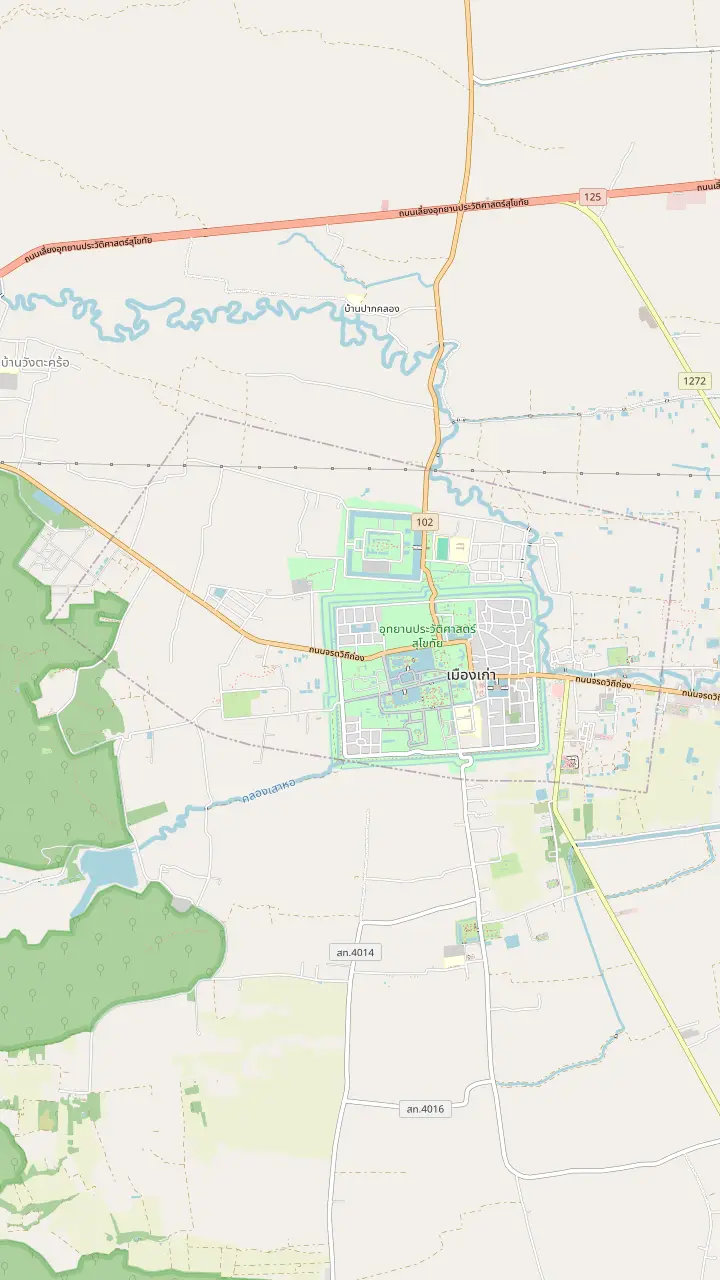
Map of 33 stops
Choose a route, then tap a pin or stop for its note and a Google Maps link.
TAT calls Wat Mahathat the centre of the historical park, with a grand pagoda ringed by 8 smaller ones as if they were a lotus.
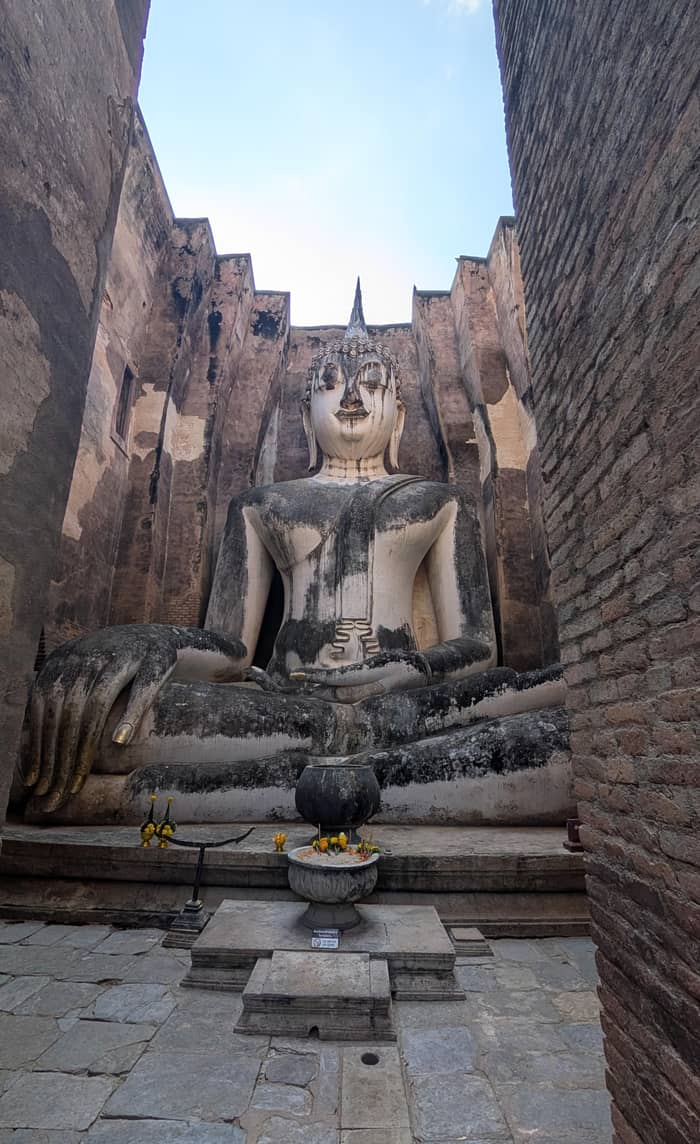
Google MapsHome of Phra Atchana, a gigantic seated Buddha image in the main hall.
Google MapsThe Fine Arts Department names its prasart among the Khmer-influenced works at ancient Sukhothai.
Google MapsThe temple stands in the Aranyik area, where King Ramkhamheng joined the Kathina ceremony at the end of Buddhist Lent.
Google MapsA temple in the eastern part of the park, on the road toward the town.
Google MapsSouth of Wat Mahathat, with 3 Lopburi-style prangs behind a laterite wall.
Google MapsThe Ramkhamhaeng Museum stands near the park entrance and keeps finds from Sukhothai and Si Satchanalai.
Google Maps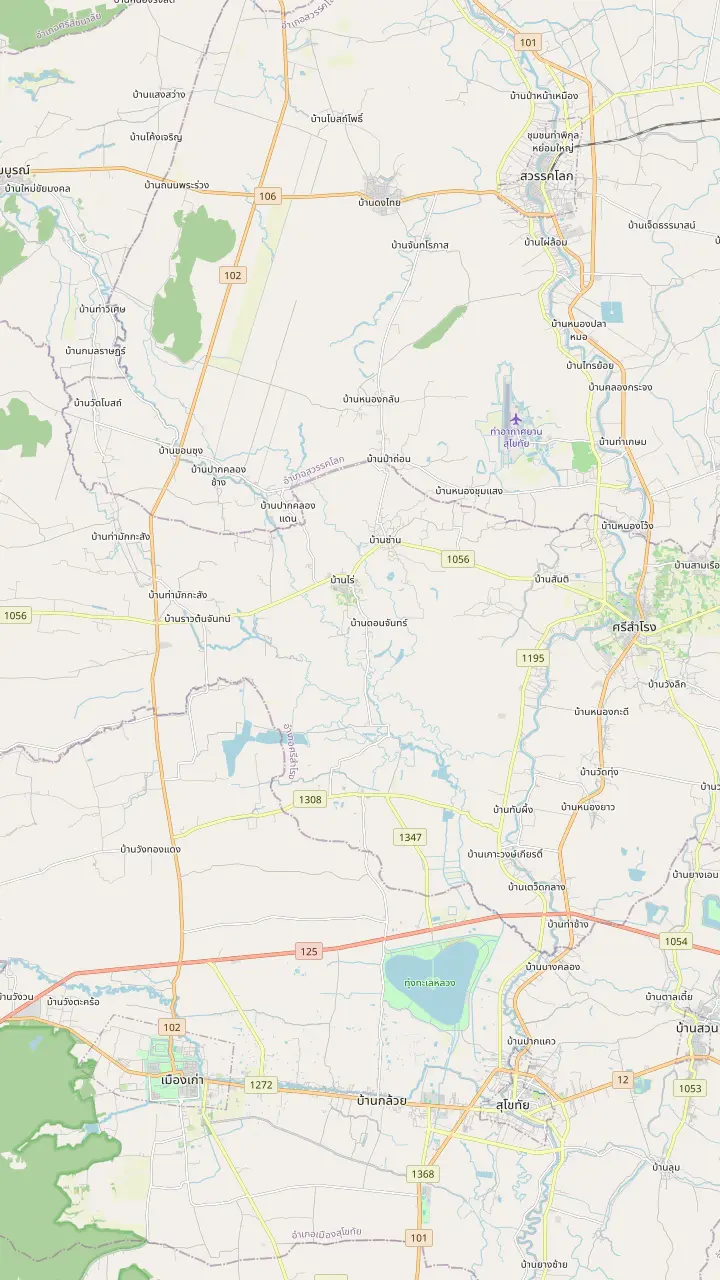
The modern town, with the shops and the bus terminal, where the Saturday walking street market sets up in the evening.
Google MapsThe park lies 12 km from the town of Sukhothai on the Sukhothai-Tak highway.
Google MapsThe airport nearest to the park; UNESCO describes it as dedicated almost exclusively to bringing visitors to the historic towns.
Google MapsA town north of the airport whose old Chinese quarter has street art made in a 2019 TAT project.
Google Maps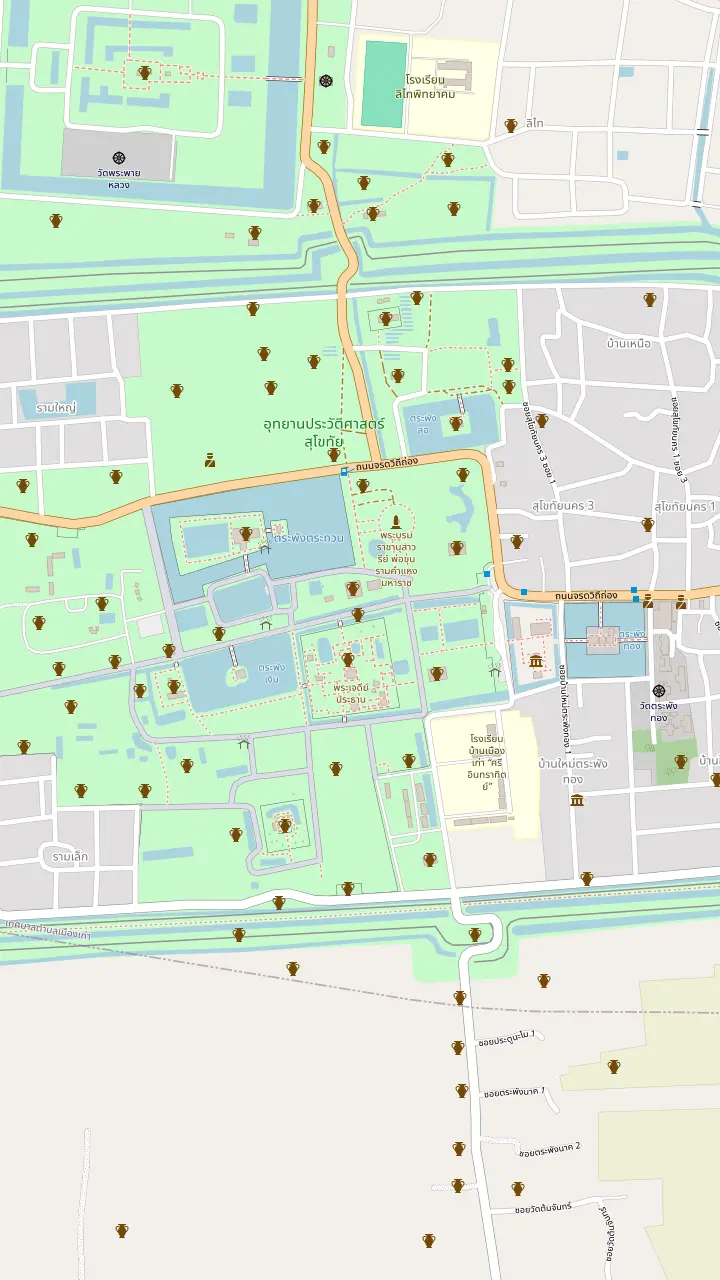
TAT calls Wat Mahathat the centre of the historical park, with a grand pagoda ringed by 8 smaller ones as if they were a lotus.
Google MapsNorth of Wat Mahathat. TAT says its main pagoda looks like a giant bell.
Google MapsNorth-west of Wat Mahathat, with its main sanctuary on an island in Traphang Trakuan Pond.
Google MapsWest of Wat Mahathat, with no surrounding wall and a single lotus-style pagoda.
Google MapsSouth of Wat Mahathat, with 3 Lopburi-style prangs behind a laterite wall.
Google MapsA bronze statue of King Ramkhamhaeng on the north side of Wat Mahathat, at the end of Jarod Vitee Tong road.
Google MapsA small shrine north of Wat Mahathat: a single laterite prang where Lop Buri-style sandstone Hindu objects were found.
Google MapsThe Ramkhamhaeng Museum stands near the park entrance and keeps finds from Sukhothai and Si Satchanalai.
Google Maps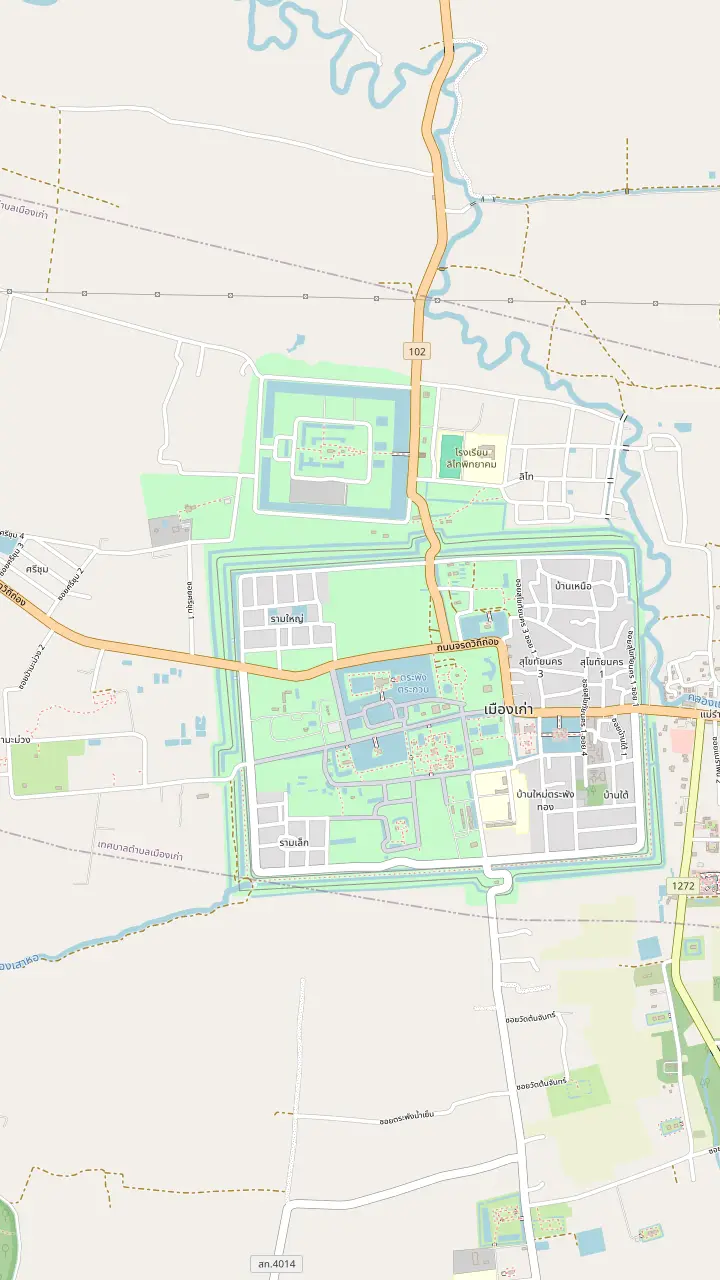
South of Wat Mahathat, with 3 Lopburi-style prangs behind a laterite wall.
Google MapsTAT calls Wat Mahathat the centre of the historical park, with a grand pagoda ringed by 8 smaller ones as if they were a lotus.
Google MapsHome of Phra Atchana, a gigantic seated Buddha image in the main hall.
Google MapsThe Fine Arts Department names its prasart among the Khmer-influenced works at ancient Sukhothai.
Google MapsThe Ramkhamhaeng Museum stands near the park entrance and keeps finds from Sukhothai and Si Satchanalai.
Google Maps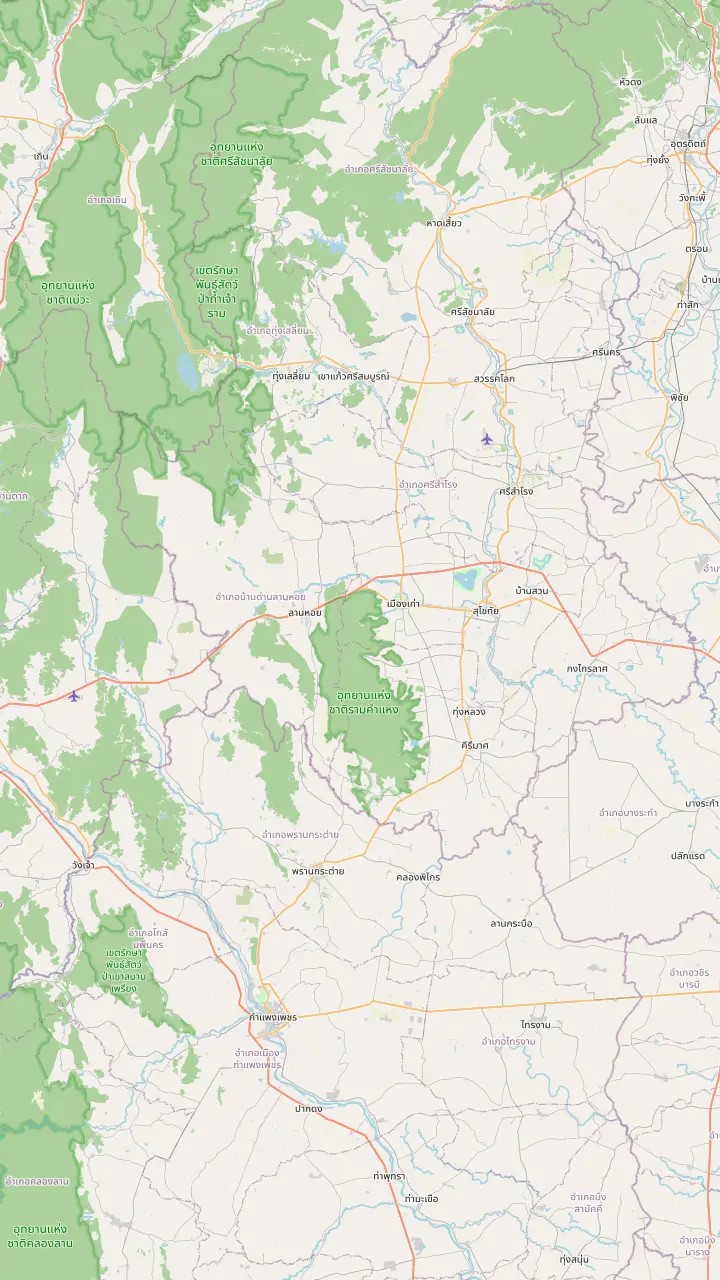
The park lies 12 km from the town of Sukhothai on the Sukhothai-Tak highway.
Google MapsUNESCO calls Si Satchanalai the spiritual centre of the kingdom and a centre of its ceramic exports.
Google MapsUNESCO describes Kamphaeng Phet as the kingdom's southern frontier town with military functions.
Google Maps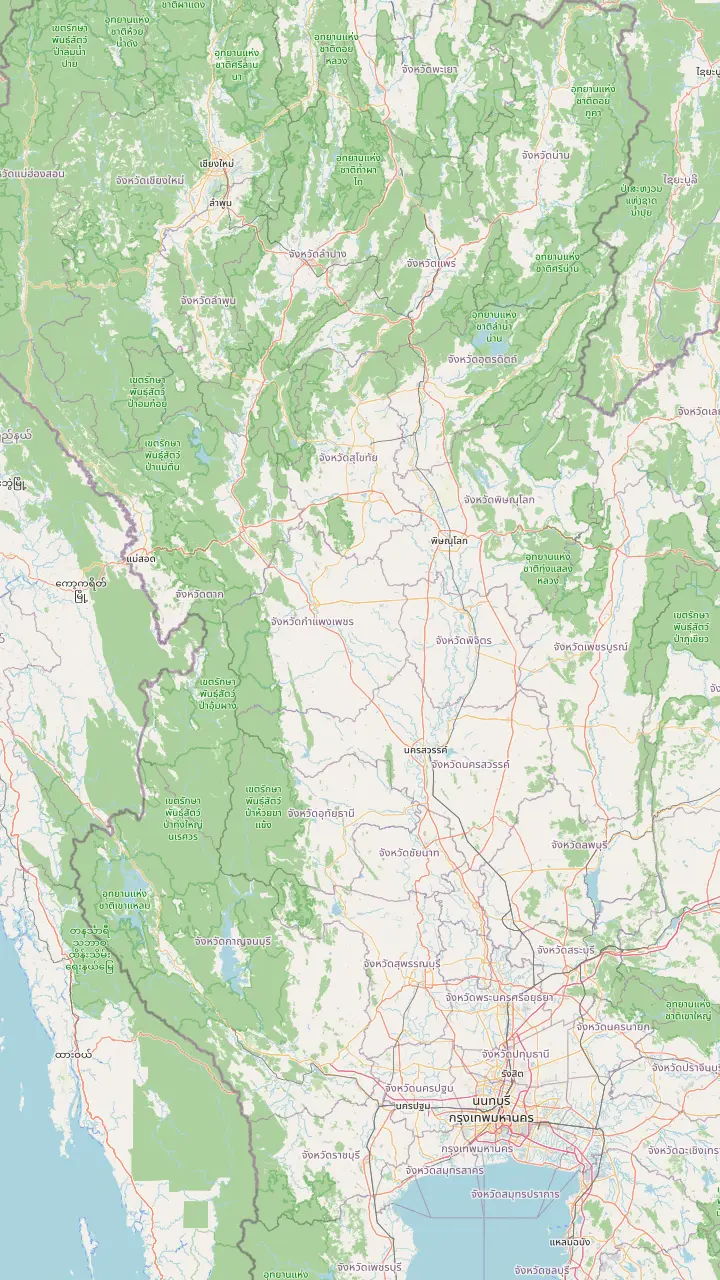
TAT puts Sukhothai 420 km north of Bangkok, four to five hours by car or 1 hour 15 minutes by air.
Google MapsThe kingdom in the south that Sukhothai ended up joining, according to the Fine Arts Department.
Google MapsAyuthaya made Pitsanulok the seat of a viceroy over the northern state.
Google MapsCentre of the Lan Na Kingdom, a rising power that put Sukhothai at risk.
Google MapsThe airport nearest to the park; UNESCO describes it as dedicated almost exclusively to bringing visitors to the historic towns.
Google MapsThe park lies 12 km from the town of Sukhothai on the Sukhothai-Tak highway.
Google Maps© OpenStreetMap contributors · map data
Where the historical park sits, how its zones divide the ruins, what each zone charges and when it closes, and a sensible order for a morning on a bicycle.
Editorial team, sukhothaihistoricalpark.click · Updated November 12, 2026 · A 7 min read
Basics
On the map, the Sukhothai ruins sit within Tambon Mueang Kao, part of Amphoe Mueang in Sukhothai Province, and the Fine Arts Department manages the whole area as a single historical park.7 The department set the ancient site at 70 square kilometres in 1975, a size that explains why a visit is more of a journey than a stroll.8 UNESCO counts 7,000 hectares for Sukhothai within its larger property, which also includes two other towns.9
Look at the map above first, because it marks the main stops. Use the tabs to switch between the zones, and the buttons to open any pin in Google Maps for directions. The pins are approximate positions of the main temples, not survey points, so confirm the exact place on your phone when you set off. A paper map from the park office, which is staffed from 08.30 am until 04.30 pm, makes a good backup.10
The Sukhothai Historical Park zones divide the ruins for ticketing and for conservation, and the numbers help you picture the spread. In the department's count, 217 sites have been explored.1 Inside the rampart there are 66, while the northern, southern, eastern and western outer areas hold 30, 39, 24 and 58 respectively.1 The structure of this page follows that split, beginning with the walled centre and moving outwards.
Side by side
| Zone | Sites | Fee, visitors from abroad | Opens |
|---|---|---|---|
| Inner historic zone | 661 | THB 2002 | 06.30 am5 |
| Northern outer zone | 301 | THB 1203 | 07.30 am5 |
| Western outer zone | 581 | THB 1204 | 08.00 am5 |
| Southern outer zone | 391 | Not listed | Ask on the day |
| Eastern outer zone | 241 | Not listed | Ask on the day |
Fees and hours as the Fine Arts Department publishes them; the southern and eastern areas have no separate fee in its list.2,3,4
The inner historic zone is the heart of the park and the one with the highest gate price: THB 200 for visitors from abroad.2 It holds 66 of the explored sites, and it is where Wat Mahathat stands, together with Wat Sa Si and Wat Chana Songkhram, the temples the tourism authority named as the focus of a lit-up evening in July 2022.1,11 Our pages on Wat Mahathat and the central temples describe them in detail.
Gates here open at 06.30 am daily.5 Closing time is 07.30 pm from Monday to Friday and on Sunday, and 09.00 pm when Saturday comes around.5 Cars are not admitted inside it, so you arrive on a bicycle, on foot or with a tour that handles the transport.6 The distances between the central temples are modest, which is why the inner zone is the natural place to begin.
Near the entrance stands the Ramkhamhaeng Museum, which keeps the finds from the excavations at Sukhothai and Si Satchanalai.12 It makes a good first stop for orientation, or a refuge from the midday sun. The tour sold on this site reaches the park through the Eastern Gate, rides the central ruins with a guide and later cycles the south area, so the inner zone is the first big block of the day.
Sites by zone
Counts of explored historic sites as the Fine Arts Department lists them for the whole park.1
Two of the best-known northern sites are Wat Si Chum and Wat Phra Phai Luang, outside the north wall of the old city. The department counts 30 explored sites in the northern external areas, and it charges visitors from abroad THB 120 for this zone.1,3 Their gate is open for a shorter day than the centre's, from 07.30 am until 05.30 pm, so they fit best into the early part of a ride.5
The history pages explain why the north matters. A stone inscription found at Si Chum temple, north east of Sukhothai, describes the early period of the kingdom, which makes the temple a source for historians as well as a place of pilgrimage.14 The department also lists Wat Phra Phai Luang among the places that show the influence of Khmer art.15
Reach the north by bicycle or by car, since cars are allowed at Wat Phra Phai Luang at THB 50 per vehicle.6 A bicycle costs THB 10.6 Our page on Wat Si Sawai and Wat Si Chum covers the temples one by one, so use the map here to place them and that page to decide how long to stay. Allow extra time for the ride out and back, since the roads in the north are shared with local traffic and the gate for these temples is separate from the one in the centre.
Plan your ride
Weigh up your time and your energy, then see which zones deserve them.
If I have a short morning
The inner zone only
If I want the big seated Buddha
Add the northern zone
If I want quiet temples and countryside
Add the Aranyik area
If I do not want to plan the order
Take the guided day
A 7 hour ride from $49 that reaches the Eastern Gate.
If I am arriving in the evening
Wait for Saturday
Saturdays are the exception, with the centre open until 09.00 pm.5
Ways around
Flexible
Hired in town
Limited
For the outer areas
See this option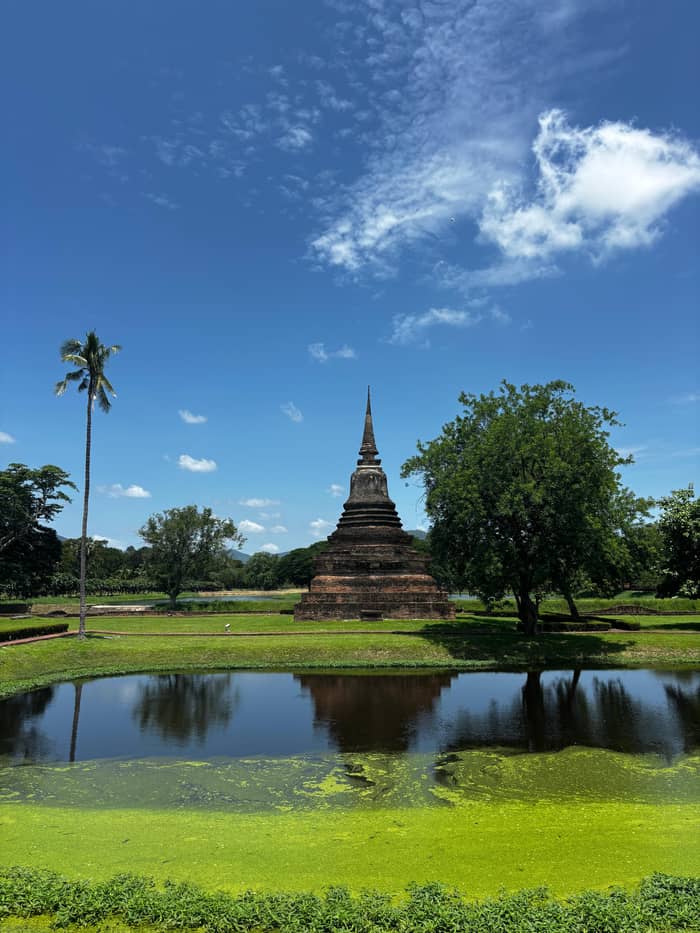
Park and villages
Sold on this site
Of the outer areas, the west has the most explored sites, 58, and it contains the Aranyik area.1 That area is open between 08.00 am and 04.30 pm and charges visitors from abroad THB 120.1,5,4 The department's own history tells us that Ramkhamhaeng rode an elephant to the Aranyik area, the boundary between city and temple, of Saphan Hin temple, at the end of the Buddhist Lent.13 It is reached by a ride or a short drive from the centre.
The southern zone holds 39 explored sites and the eastern zone 24, and both are free of a separate ticket in the department's published list, which names only the inner, northern and western areas.1,2,3,4 The cycling day on this site spends part of its afternoon in the south area, after the lunch stop. Ask your guide or the ticket window which temples in the south and east are open and whether a ticket is needed on the day.
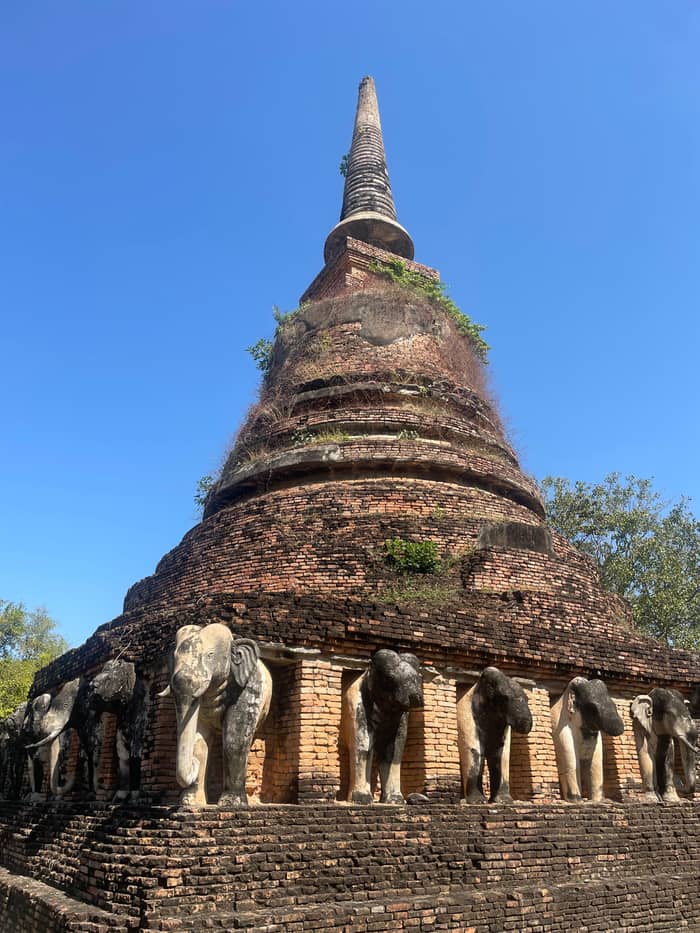
Because the outer areas are spread out, a bicycle is the practical choice, and the countryside between them is part of the pleasure. At the gate, a car is accepted solely at Wat Phra Phai Luang and in the Aranyik area.6 UNESCO also notes that the towns of the kingdom had engineers who dammed water and built reservoirs, ponds and canals, so many of the old waterworks still shape the landscape you ride across.39
A morning in the park
06.30 am
First light at the centre, gates open from 06.30 am.5
07.30 am
The northern pair of temples opens its gate.5
08.00 am
The western outer zone opens at 08.00 am.5
08.30 am
The office opens for questions and maps.10
04.30 pm
05.30 pm
The northern pair closes at 05.30 pm.5
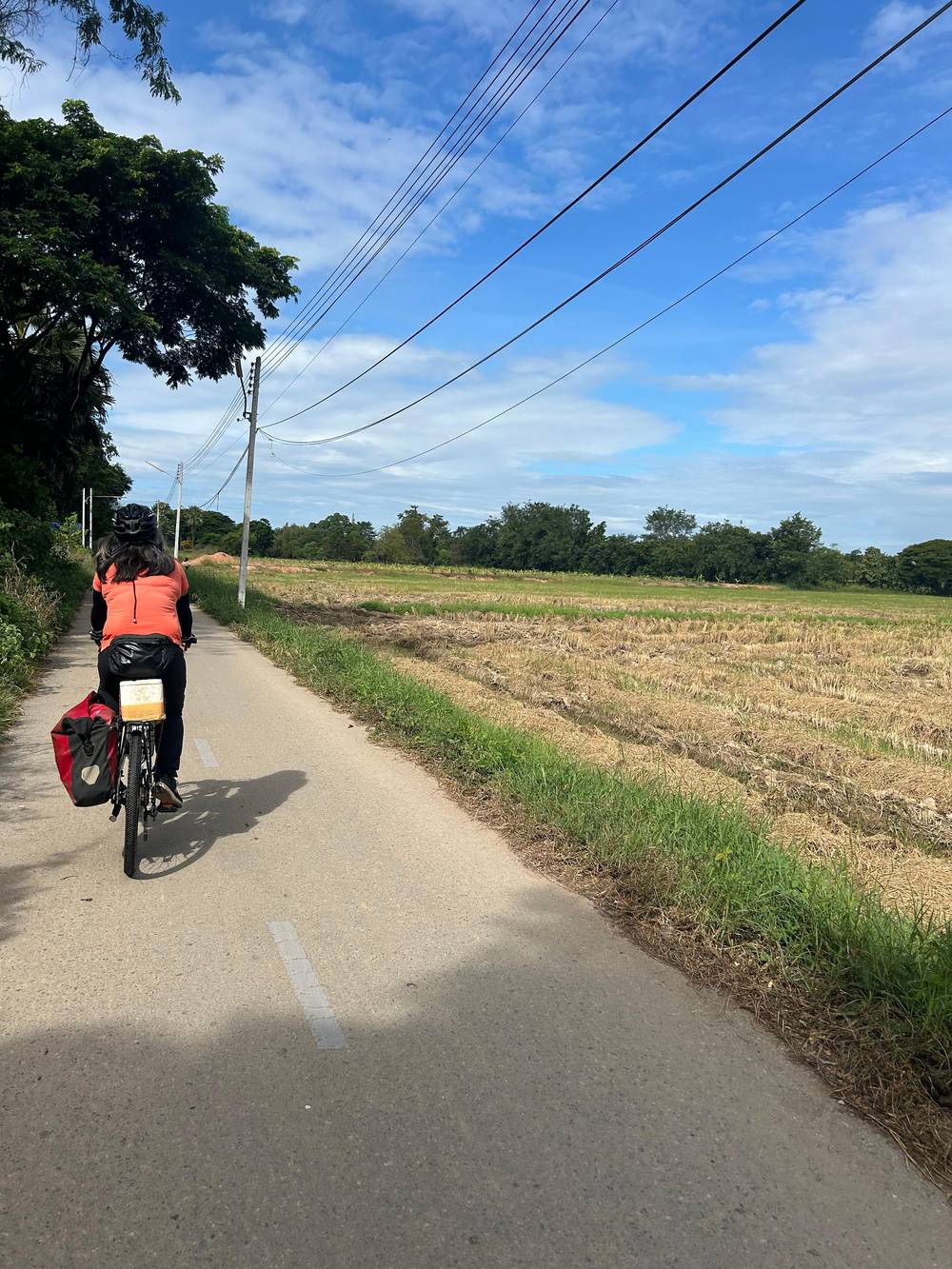
A bicycle is a practical way to cover the zones, and the gate charges THB 10 for one.6 The rental itself is a separate arrangement with a shop, and the official page gives no price for it. Bring cash for the ticket, a hat and water, and expect to share the road with other visitors and local traffic. Wear comfortable clothes and shoes, and keep a phone charged for the map on this page, which works as a back-up if you lose the paper one from the office.
For a morning, start in the inner zone as soon as it opens at 06.30 am, while the light is soft and the day is cool.5 Move north when the temples there open at 07.30 am, and keep the Aranyik area for after 08.00 am, when it opens.5 That order follows the opening times, so you never arrive at a closed gate.
If you prefer a guide, the cycling day sold here collects you from your hotel, rides through the villages first and reaches the Eastern Gate before lunch, which saves you from planning the order yourself. The sunset ride and the half-day ride use the countryside rather than the inner zone, so check the itinerary before choosing one for the ruins.
Video
nomadraul on YouTube · The video stays unloaded until you press play.
he rode on an elephant to worship Buddha's images and participated in Kathina Khandhaka ceremony at "Aranyik Area" (boundary between city and temple) of Saphan Hin temple.
At the gate
A map shows where things are, not what the day feels like. Heat, dirt tracks and the quality of the light all change a day in the park, and the operator of the ride cautions that it can get very hot. Thailand's tourism authority names November to February, when humidity is lower, as the time to travel, and that spell is kinder to anyone cycling from zone to zone.40
It also cannot tell you what is open on a given day. The park lists hours by area and keeps a late Saturday opening for the inner zone, but events and holidays can change the picture, and the department lists annual holidays when Thai visitors enter free, which can make the park busier.5,41 This year the Loy Krathong festival inside the park is scheduled for 15 to 24 November.42
Use the page as a plan, then check on the day. Our fees page lists every gate charge, our getting-there page covers the road in, and the temple and history pages give the stories behind the pins. Together they turn the map from a drawing into a day you can ride, with times, prices and stories behind each pin. Save the page on your phone before you set off, because signal can be patchy in the countryside between the zones.
FAQ
The department counts 66, 30, 39, 24 and 58 explored sites in those five areas.1
They open at 07.30 am and close at 05.30 pm, shorter hours than the centre.5
The gate lists the bicycle charge, and the rental price is set by the shop.6
Riders enter through the Eastern Gate, and the south area is cycled later in the day.
The Ramkhamhaeng Museum keeps finds from Sukhothai and Si Satchanalai.12
Sources
Read next
Planning Sukhothai? Ask a real person here.